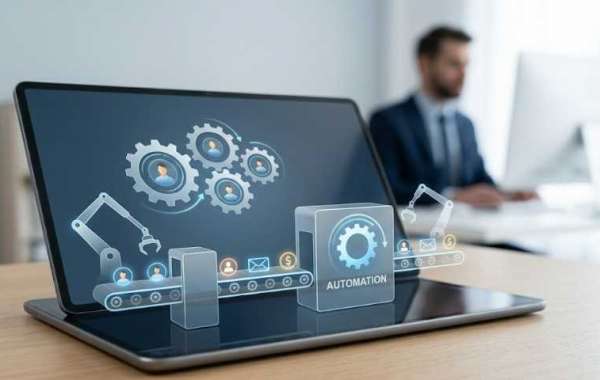

Many small businesses still rely on spreadsheets, scattered emails, and manual follow-ups to manage customers. This approach often leads to missed opportunities, inconsistent communication, and limited visibility into the customer lifecycle. As operations grow, these gaps become harder to manage.
This is where an AI-powered CRM for small businesses begins to change how work gets done. Instead of simply storing customer data, it actively processes information, predicts behavior, and automates routine decisions. Understanding how it works and what it replaces helps clarify why it is becoming central to modern small business management.
What Is an AI-Powered CRM for Small Businesses?
An AI-powered CRM for small businesses is a customer relationship management system that uses artificial intelligence to automate tasks, analyze customer data, and improve decision-making across sales, marketing, and support functions.
Unlike traditional CRM systems that require manual input and interpretation, AI CRM tools continuously learn from interactions. They identify patterns in customer behavior, prioritize leads, and recommend next steps without constant human oversight.
This shift turns CRM from a passive database into an active operational system.
How AI CRM Works in Practice
At its core, an AI CRM combines data collection, machine learning, and automation to streamline customer management. It connects various touchpoints, emails, calls, website activity, and transactions into a unified system.
1. Data Collection and Integration
AI CRM platforms gather data from multiple sources:
- Customer interactions (emails, calls, chats)
- Website behavior and engagement
- Purchase history
- Social signals and feedback
This data is automatically organized into structured customer profiles.
2. Pattern Recognition and Insights
The system analyzes data to detect patterns such as:
- Which leads are most likely to convert
- When customers are likely to disengage
- What communication channels perform best
These insights help businesses make informed decisions without manual analysis.
3. CRM Automation and Workflow Execution
AI-driven CRM for small enterprises automates repetitive tasks, including:
- Lead scoring and prioritization
- Follow-up reminders and scheduling
- Email responses and campaign triggers
- Customer segmentation
Automation reduces human error and frees up time for strategic work.
4. Predictive Recommendations
AI CRM systems go beyond reporting by suggesting actions:
- When to contact a lead
- Which offer to present
- How to improve customer retention
These recommendations improve efficiency across the customer lifecycle.
What Does AI CRM Replace in Small Businesses?
One of the most practical ways to understand AI CRM is to look at what it replaces. Small businesses often operate with fragmented tools and manual processes that AI consolidates and improves.
Manual Data Entry
Traditional CRM systems require constant updates. AI automates data capture, reducing the need for manual input and minimizing inconsistencies.
Spreadsheet-Based Tracking
Many small teams rely on spreadsheets to track leads and customers. AI CRM replaces this with dynamic dashboards that update in real time and provide deeper insights.
Guesswork in Lead Management
Without AI, businesses often rely on intuition to prioritize leads. AI CRM uses data-driven scoring to identify high-value prospects more accurately.
Repetitive Communication Tasks
Sending follow-ups, reminders, and updates manually consumes time. CRM automation handles these tasks while maintaining consistency.
Disconnected Tools
Small businesses frequently use separate tools for email, marketing, and sales. AI CRM integrates these into a unified system, improving coordination and visibility.
Direct Answer: How Does AI CRM Improve Small Business Management?
AI-powered CRM improves small business management by automating routine tasks, analyzing customer data in real time, and providing predictive insights that guide decision-making across sales, marketing, and customer support.
This leads to better lead prioritization, faster response times, and more consistent customer experiences, all without increasing operational complexity.
Understanding the Customer Lifecycle with AI CRM
The customer lifecycle includes every stage of interaction, from initial awareness to long-term retention. AI CRM enhances each stage by applying automation and intelligence.
Awareness and Lead Capture
AI tools identify potential customers through behavior tracking and automatically capture leads from various channels.
Engagement and Nurturing
AI CRM personalizes communication based on customer behavior, ensuring relevant and timely interactions.
Conversion
Predictive analytics highlight which leads are ready to convert, helping teams focus their efforts effectively.
Retention and Loyalty
AI detects early signs of churn and suggests actions to retain customers, such as targeted outreach or personalized offers.
This lifecycle-focused approach ensures that no stage is overlooked.
Real-World Scenario: A Small Service Business
Consider a small service-based business managing inquiries through email and phone calls. Without AI CRM, the owner manually tracks leads, follows up inconsistently, and struggles to identify which prospects are most valuable.
With an AI CRM system:
- Incoming inquiries are automatically logged and categorized
- Leads are scored based on engagement and likelihood to convert
- Follow-ups are scheduled and triggered automatically
- Insights reveal which services generate the most interest
The result is a more organized and efficient workflow without increasing staff.
Industries Where AI CRM Is Making an Impact
AI CRM is not limited to one sector. It is used across various Industries, including:
- Retail and e-commerce for personalized marketing
- Real estate for lead tracking and follow-ups
- Professional services for client management
- Healthcare administration for appointment coordination
- Education services for student engagement
Each industry benefits from improved efficiency and better customer insights.
Choosing the Right AI CRM Solutions
Selecting the right system depends on business needs rather than features alone. Key considerations include:
- Ease of use and onboarding
- Integration with existing tools
- Level of automation required
- Scalability as the business grows
A practical approach is to prioritize Solutions that simplify workflows rather than add complexity.
FAQs
What is the main purpose of an AI CRM?
The main purpose is to automate customer management tasks and provide data-driven insights to improve decision-making.
How is AI CRM different from traditional CRM?
AI CRM actively analyzes data and automates processes, while traditional CRM mainly stores and organizes information.
Can small businesses benefit from AI CRM?
Yes, it helps small businesses save time, improve efficiency, and manage customer relationships more effectively.
Does AI CRM require technical expertise?
Most modern systems are user-friendly and designed for non-technical users, requiring minimal setup.
What tasks can AI CRM automate?
It can automate lead scoring, follow-ups, email responses, data entry, and customer segmentation.
Is AI CRM suitable for all industries?
It is adaptable and used across many industries, including retail, services, and professional sectors.
Does AI CRM improve customer retention?
Yes, it identifies patterns and signals that help businesses address issues before customers disengage.
What should small businesses look for in AI CRM solutions?
They should focus on usability, integration, automation capabilities, and scalability.